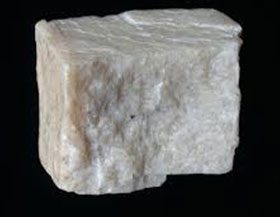
Quartz is a mineral. It is one of the minerals that may be found in the greatest quantities on earth. Silica and oxygen are the components that make up this substance. The mineral crystal you see here is made of quartz. Doping by metal ions is the process by which various metal ions "sneak" into the quartz crystal lattice during the process of production and give it various other colours besides clear or white. Green comes from copper, red or pink from iron, and blue from titanium are some of the colors.
Silicon dioxide, more often known as quartz, is an oxide of silicon that has the formula SiO2 in its chemical make-up. Quartz is the most common form in which it may be discovered in nature. However, it can also be discovered in a wide range of living organisms, including bacteria. In many parts of the world, silica makes up a significant portion of the sand. Silica is one of the families of materials that is both one of the most complex and one of the most abundant. It may be created synthetically or as a mixture of many different minerals. Both in its natural state and as a result of human industry, it may be found.
Quartz Granules Suppliers India is leading makers and largest producer and manufacturer of quartz. They extract quartz from their own mines, and the mineral's silica concentration is more than 99%. They may deliver quartz powder, quartz granules and quartz lumps. They are even capable of producing high-grade silica ramming material for foundries and furnaces, which is used in the metal casting process. Foundry sand, the petroleum industry, fake granites, ceramic and sanitary ware, and so on all make use of quartz grits. Other applications include.
1. "High refractoriness in order to maintain the working temperature."
2. a high level of corrosion resistance when exposed to steel and slag
3. "High electrical resistance to avoid short circuiting." [Citation needed]
4. Quality that is always maintained (purity of 98.65%)
5. Grain sizes were mixed together in proportion to the capacity of the furnace.
6. "Not containing any iron oxide" (FeO)
7. At high temperatures, there is a little amount of expansion and contraction (treated)
8. "Moisture free and sea worthyily packed
9. Low down time for the liner of the furnace
Quartz Granules may be active without risk up to a temperature of 1600 degrees Celsius during operation. Because it does not expand to the same degree as alumina and magnesia refractories do, it is more resistant to the effects of thermal shocks. In spite of the fact that silica lining has a high tolerance for thermal stress, it has a low resistance to the slags produced by steelmaking. Controlling the temperature is very essential in order to provide an acceptable lining life.
1. Quartz may be used in a great many different ways. Quartz is used in the production of glasses and bricks, while quartz crystals are utilized in the production of gemstones and jewelry. Quartz is also used in the production of resonators made entirely out of quartz. These resonators function as high-performance resonators and may be found in oscillators and filters.
2. Produce glass and laboratory equipment, as well as silica brick, cement, and mortar.
3. In the processes of stonecutting, sandblasting, and glass grinding, ground quartz is used as an abrasive.
4. Quartz powder is essential in the production of porcelain, scouring soaps, sandpaper, and wood fillers, among other products.
5. Quartz powder is used in the generation of friction in railroad and mining activities due to its high strength as well as its large grains, which help to reduce the likelihood of fracture. In addition to that, it is used in the leisure activities of golf courses, baseball diamonds, and sandboxes for children, volleyball courts, and beaches. It is also used as a filler in the manufacturing of plastics, toothpaste, and soap, in addition to being used to clean jewelryand buff out blemishes on wood.
6. Quartz Granules with a high degree of accuracy are in great demand in the industrial sector. In today's world, the majority of quartz crystals that are used in electronic components and optical equipment are created in labs rather than extracted from mines. This shift in production method is relatively recent. The vast majority of labs cultivate their crystals by using techniques that are based on the hydrothermal activity that occurs naturally on geological formations.
Quartz may be found in all three types of rocks due to its pervasive nature, its capacity to tolerate a broad range of temperatures, and its status as a sedimentary rock. Igneous rocks are the source of quartz. Quartz Granules Suppliers India and Soapstone Powder India mineral are one of the most well-known suppliers of quartz and is well-known for the excellent quality of its goods as well as the services that it provides. They only provide Quartz granules of the highest possible quality, and their prices are quite reasonable. They have come up with a strong reputation in the industry.